
Why Ladder Fire Truck Cost Starts With Two Misread Numbers
Ladder fire truck cost gets misjudged early, usually because two different numbers are read as one: the working height a department actually needs, and the ladder length printed on the spec sheet. They sound interchangeable. They are not, and the mix-up shows up in the budget long before anyone negotiates.
Working height is the elevation a crew can safely work from once the ladder’s angle, extension, and platform position are accounted for. Ladder length is the structural length of the boom itself. A 100-foot ladder does not give 100 feet of working height, and treating it as if it does builds the wrong expectations into both the spec and the price.
The sections below cover the two variables that move the final number most: working height, and the chassis it forces. The aim is practical – help officials and procurement officers read a quote, compare configurations, and see which line items drive the total.
Working height comes first, because it sets the boom class and therefore the base figure a manufacturer quotes. The chassis comes second: weight ratings, axle configuration, and aerial stability requirements separate a light commercial platform from a heavy-duty one, and the difference is not small.
Raise the working height and the chassis has to grow with it. Heavier booms need stronger frames, larger outriggers, and a higher gross vehicle weight rating, and each step adds cost.
If you are comparing builders, it helps to line up ladder fire truck options side by side before the specification is locked.
Working Height Is Not Ladder Length
Ladder length is probably the most misread figure on any spec sheet. Knowing how it differs from working height is where a realistic budget starts.
Working height is the highest point a firefighter can safely work from at the aerial device’s tip or platform, measured from the ground. Ladder length is the manufactured length of the ladder structure, measured along its members. The two are never equal, and the gap decides what a ladder fire truck can do on scene.
Outreach: the horizontal cousin
Outreach is how far the aerial reaches horizontally, from the chassis centerline out to the ladder tip. Height and outreach trade off, so a unit rarely gives you both at full extension.
Why angle and chassis position shrink usable reach
- Raised steeply, the ladder keeps height and gives up horizontal reach.
- Laid flatter, it gains outreach and loses height.
- The truck has to set its stabilizers, and it often cannot park flush against the building, so part of the outreach is spent just reaching the wall.
Either way, usable reach is smaller than any single figure on the sheet suggests.
Why buyers misread the figures
A listing that advertises a “100 ft ladder” invites the assumption that the rig reaches 100 ft of usable height. It does not: working height sits below ladder length, and effective outreach drops as the angle steepens and the setup distance grows.
How this inflates or deflates cost expectations
Equating ladder length with working height goes wrong in two directions. One buyer pays for a longer aerial-ladder fire truck than the job needs; another buys short and finds out later that the rig cannot cover the target safely. Both mistakes land in the invoice through boom size, stabilizer spread, chassis weight, and axle configuration. Departments planning a purchase can work through ladder truck cost for municipal fire departments before comparing quotes.
A bigger number on the sheet does not translate proportionally into ladder fire truck cost, because many ratings are measured under conditions that never match the job. A large working height figure sounds decisive, but it rarely equals the safe, loaded reach a crew uses day to day. Procurement teams should know how each headline specification is defined before they compare quotes or sign.
Specifications Buyers Commonly Misread
- Rated working height – Typically the maximum reachable point under ideal conditions, not the safe height for routine use.
- Ladder length – The total structural length of the ladder, which exceeds the usable working height once deployed.
- Maximum outreach – Advertised at ideal angles with minimal load; real reach drops with nozzle reaction and wind.
- Chassis GVWR – Often treated as payload, but it includes the truck, ladder, water, and crew weight together.
- Axle configuration – Read as a simple wheel count while ignoring axle ratings that cap ladder weight and price.
- Stabilizer footprint – Assumed fixed, yet deployment width dictates setup space and influences the final cost.
Any one of these gaps can put two similar-looking trucks at very different price tags. For the wider cost picture, see this guide to ladder truck cost for municipal fire departments.
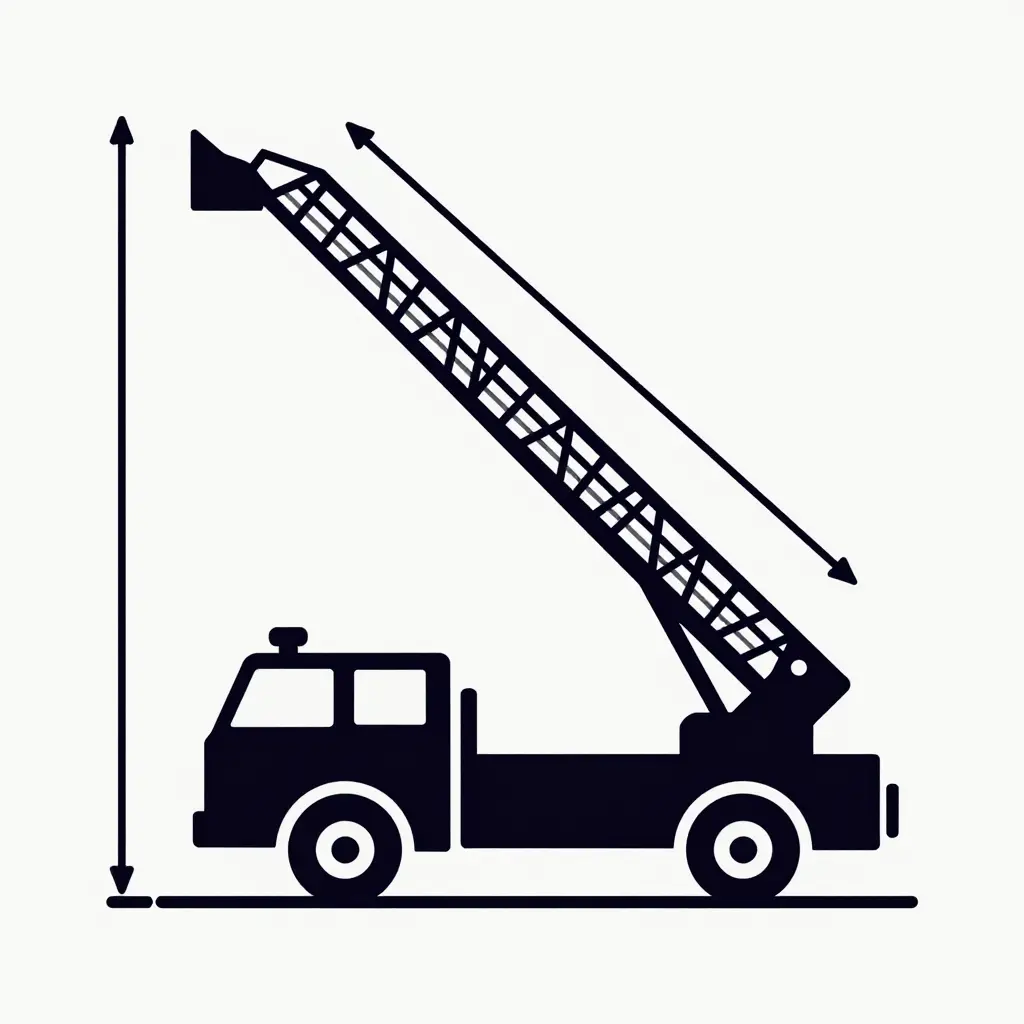
The diagram shows the most common point of confusion in these specs: working height and ladder length are not the same number. Ladder length is the boom’s physical reach, measured along the diagonal. Working height is the vertical distance from the ground to the highest point a firefighter can safely work from, usually the ladder tip plus the reach of a person standing on it. Because the ladder sits at an angle, a 100-foot ladder does not give 100 feet of vertical height; the steeper the angle, the more of that length converts into usable height.
Chassis Gaps Buyers Overlook
A “chassis gap” is the distance between the chassis class a buyer assumes is needed and the class the working height actually demands. Early estimates often take the ladder’s advertised reach and treat the chassis as a fixed base. That is where the widest price swings sit.
The first divide is commercial versus custom. A commercial chassis starts from a mass-produced truck platform: cheaper, serviced almost anywhere, and adequate for lighter aerials. A custom chassis is engineered for fire service, with heavier frames, higher gross vehicle weight ratings, and reinforced mounting points. As working height climbs, the platform, water load, and outrigger reactions push a build from one to the other, and that shift alone can add six figures before a single ladder option is priced.
Cab size widens the gap further. Taller aerials usually mean more crew, more control stations, and more seating, so the cab grows and the frame lengthens. A longer wheelbase then needs stronger rear-axle capacity and heavier suspension to stay stable under load. Buyers who budgeted for a mid-range chassis often find the axle rating they need is a full class higher.
| Chassis class | Build approach | Working-height fit | Cost impact |
|---|---|---|---|
| Commercial | Mass-produced truck platform | Lighter, shorter aerials | Lower base, lower ceiling |
| Custom | Fire-service engineered frame | Heavy, tall aerials | Higher base, higher ceiling |
These gaps rarely show up in a first-pass estimate, because they only appear once working height is fixed. Model the chassis early, next to the aerial, instead of leaving it as a later line item. Match chassis class, cab, wheelbase, and rear-axle capacity to the real working height from the start, and the total stops surprising the budget.
Ladder Fire Truck Cost by Working Height and Chassis Class
Match the working height you need against the chassis class it demands before signing anything. Under-spec the chassis and you pay later; over-spec it and you spend budget you did not need to. The table below maps ladder fire truck cost across the common height tiers. For municipal budgeting detail, see this breakdown of ladder truck cost for municipal fire departments.
| Working Height Tier | Typical Chassis Class | Axle Configuration | Estimated Cost Range |
|---|---|---|---|
| 20-30 m | Medium-duty commercial | 2-axle (4×2) | USD 400,000 – 650,000 |
| 30-40 m | Heavy-duty custom | 3-axle (6×4) | USD 700,000 – 1,000,000 |
| 40-50 m | Heavy-duty custom | 3- to 4-axle (6×4 / 8×4) | USD 1,100,000 – 1,700,000 |
| 50 m+ | Severe-duty custom | 4-axle (8×4) or tandem steer | USD 1,800,000 – 3,000,000+ |
Note: Prices above are indicative ranges only. Actual ladder fire truck cost varies significantly by configuration (aerial type, pump and tank specs, outrigger design, electronics), currency, and regional market conditions. Always request a factory quote tailored to your operational requirements.
How Working Height Tiers Drive Cost
A ladder fire truck is not priced by the meter. It is priced by what a taller working height forces the rest of the vehicle to become. Every step up the height range pulls a chain of upgrades behind it: a heavier chassis, a wider stabilizer footprint, more demanding structural engineering. That chain, not the ladder, is what moves ladder fire truck cost so sharply between tiers.
Chassis class climbs with every tier
Working height sets the reach; the chassis has to carry it. A modest working height can sit on a commercial or mid-duty chassis. Add height, and you cross into a heavier gross vehicle weight rating (GVWR), a longer wheelbase, and a larger engine and braking package. The chassis is often the largest single line item, so this jump alone shifts the price. Anyone comparing fire truck chassis options and classes sees quickly that the platform underneath sets the number.
Stabilizer footprint widens
Taller aerial-ladder fire trucks need a wider outrigger spread to stay stable. Wider means more steel, heavier outrigger beams, and reinforced frame sections. It also changes where the truck can be positioned and leveled on scene, which feeds back into the engineering budget.
Engineering complexity compounds
As height rises, stress, torsion, and dynamic loading rise with it. Engineers answer with higher-grade steel, thicker booms, and more testing. Certification and validation grow with every tier, and that labor is expensive.
Why the curve bends upward
Cost does not rise in a straight line. Up to a point, several tiers can share one chassis family and outrigger design. Cross the threshold and the platform resets: new chassis class, new stabilizers, new engineering. That reset is why a small increase in working height can trigger a large price jump.
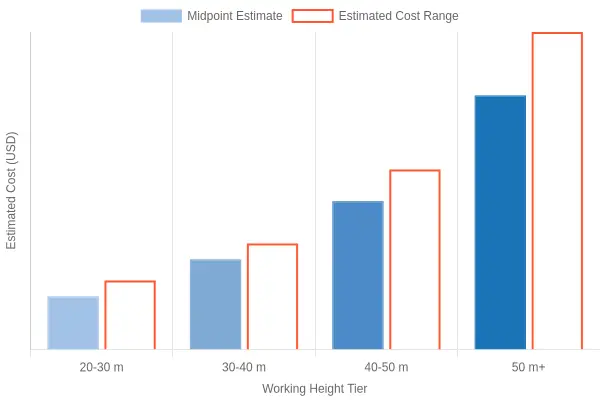
The chart below maps the tiers to their typical cost build-up.
Estimated Ladder Fire Truck Cost by Working Height Tier
Ladder fire truck pricing does not climb in a straight line. Every jump in working height demands longer booms, heavier outrigger systems, larger turntables, and a more powerful chassis, and those compound into a steeper curve. The chart shows it: midpoints climb gradually through the lower tiers, then steepen once you pass 40 meters.
| Working Height Tier | Estimated Cost Range (USD) | Midpoint Estimate (USD) |
|---|---|---|
| 20-30 m | 400,000 – 650,000 | 525,000 |
| 30-40 m | 700,000 – 1,000,000 | 850,000 |
| 40-50 m | 1,100,000 – 1,700,000 | 1,400,000 |
| 50 m+ | 1,800,000 – 3,000,000 | 2,400,000 |
For procurement teams, the lesson is to budget for a curve, not a slope. A 5-meter increase at the top of the range adds far more to the invoice than the same increase near the bottom, so it pays to be precise about the reach you actually need. For departments weighing these figures against real budgets, this guide to ladder truck cost for municipal fire departments breaks down where the money goes.
Chassis Class and Axle Decisions That Change the Invoice
The chassis sits under everything else on a ladder truck, and it is often the first line item to reshape the invoice. A commercial fire truck chassis costs less upfront and can be serviced through standard truck dealerships, which keeps downtime and parts predictable. A custom chassis is purpose-built, with reinforced frame rails, heavier front axles, and higher gross vehicle weight ratings. Those push ladder fire truck cost up, and they are what a heavy aerial device needs to stay stable.
Rear axle choice moves the number just as much. A single rear axle costs less and saves weight, but it caps payload and limits how large an aerial the truck can safely carry. Tandem axles spread the load across more tires, improve braking and traction, and raise legal weight capacity, at a higher purchase price and more maintenance.
Cab configuration shifts the total too. Larger crew cabs and raised-roof designs add cost, weight, and length, but they improve crew safety and ergonomics. Weight distribution ties the choices together: poor balance forces heavier axles, stiffer suspension, and bigger brakes, so a careless layout inflates the final price.
For municipal buyers the trade-off is rarely just upfront price. A lower-cost commercial build can suit lighter aerial work and a tight budget; a custom chassis often holds resale value and is easier to service long term. Ladder truck cost is a balance of purchase price, maintenance, and residual worth.
ZOOMLION is a Chinese fire truck manufacturer with more than 30 years of B2B supply experience, and can help buyers weigh chassis and axle decisions against real operational needs.
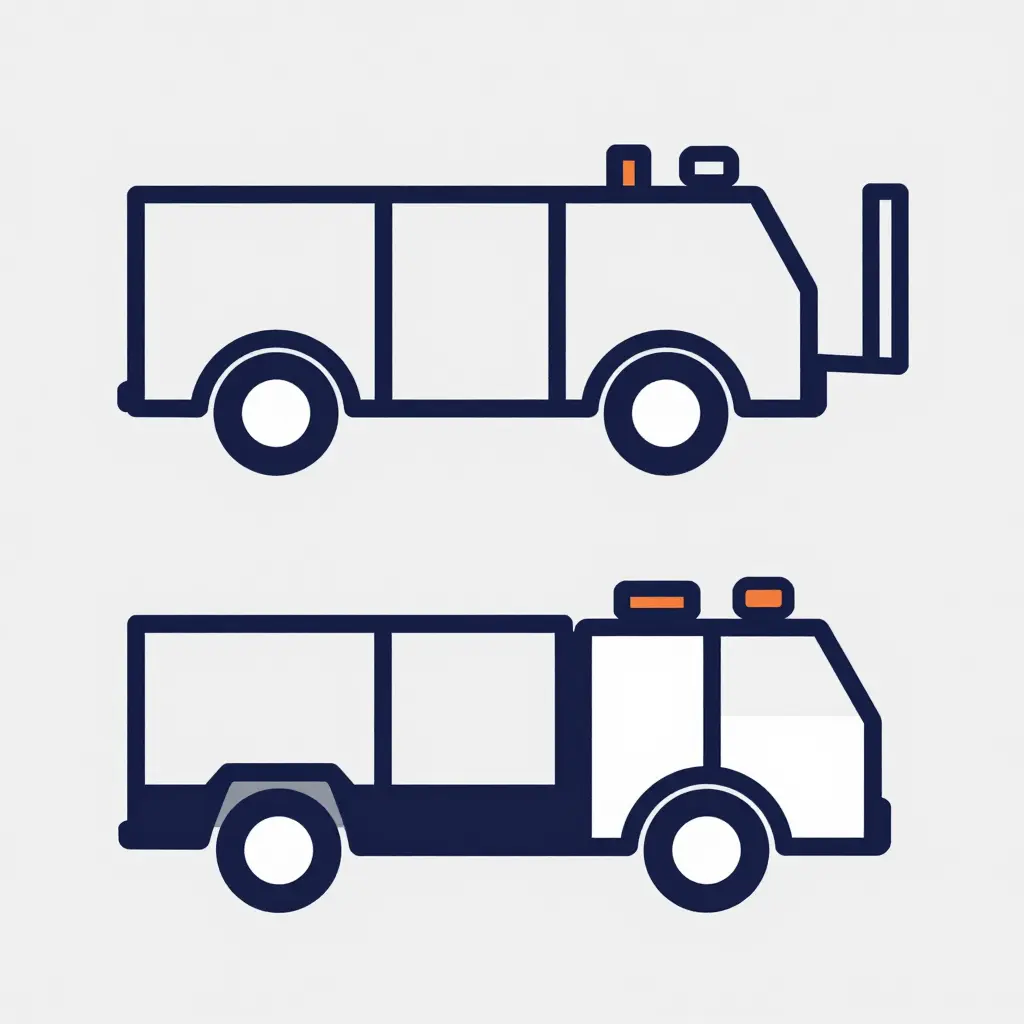
The lighter commercial chassis (top) sits low on a shallower frame; the heavier custom chassis (bottom) rides on a taller, reinforced rail. The vertical gap between those frames is where the hidden costs sit. A ladder rated for one class rarely bolts cleanly onto the other, so reinforcement, mounting redesign, and weight redistribution add to the project before anyone reviews a single line of the quote. Buyers who spot the gap early can plan for it. To see how the frame shapes the decision, it helps to know what to look for in a fire truck chassis.
Frequently Asked Questions About Ladder Fire Truck Cost
Does working height directly set the price?
Not by itself. Working height is one of the largest cost drivers, but ladder fire truck cost also reflects boom construction, aerial controls, stabilizer design, and the chassis beneath it. Two trucks with the same working height can differ by hundreds of thousands of dollars once materials, electronics, and certification are added. Treat height as the start of the budget conversation, not the final number.
Why do chassis gaps surprise buyers?
Aerial ladders need heavy-duty chassis with specific wheelbases, axle ratings, and torque curves, so not every commercial or custom chassis can carry a given boom. If the preferred chassis is unavailable, or needs engineering changes, the delivery timeline and price both move. Spec sheets rarely show the full compatibility picture, which is why these gaps slip past early budgeting. Understanding how fire truck pricing is structured helps procurement teams anticipate the adjustments.
Does a higher working height always cost more?
Generally, yes. Greater working height requires stronger booms, larger outriggers, and a heavier chassis, and those raise both material and engineering cost. But a modest-height truck fitted with premium pumps and advanced controls can cost more than a taller, plainer unit. Configuration and equipment decide the final figure, not height alone.
How does stabilizer footprint affect site suitability?
Larger working heights need a wider stabilizer spread to stay stable with the ladder extended, and that limits where the truck can set up. A wide footprint may rule out narrow streets, tight courtyards, or congested lots. Buyers have to balance reach against the space their response area actually offers; a footprint that does not fit wastes capability no matter what it cost.
Do used ladder trucks reduce cost meaningfully?
Yes, often by a wide margin, but the savings carry trade-offs. Older ladders may need recertification, structural inspection, or replacement parts, and they may not fit modern chassis standards. Anyone comparing ladder fire trucks for sale should add inspection, refurbishment, and possible downtime to the sticker price before treating it as the full cost.
Working height, chassis compatibility, stabilizer requirements, and condition all interact. Departments that understand how they connect budget more accurately and meet fewer surprises during specification and delivery.
Turning Specifications Into Accurate Ladder Fire Truck Cost Planning
Reading working height and chassis gaps correctly is the difference between a dependable budget and an expensive surprise. Working height defines the aerial’s true reach; the fire truck chassis (class, axle configuration, and gross vehicle weight rating) decides whether that reach can be delivered safely and legally on real roads. Match both to actual operational needs and the estimate reflects the complete vehicle, not a headline number.
Use this checklist before finalizing any purchase:
- [ ] Match working height to real operational needs. Confirm the tallest structure your department must realistically reach, then add a safety margin, rather than buying the tallest unit available.
- [ ] Verify chassis class and axle configuration. Check GVWR, axle count, and wheelbase against the ladder length, stabilizer footprint, and local road and bridge limits.
- [ ] Request full configuration quotes. Ask for itemized pricing covering the aerial device, chassis, outriggers, pump, bodywork, and delivery, not a single headline figure.
- [ ] Confirm after-sales support. Include operator training, spare parts, and service coverage for the full life of the vehicle.
ZOOMLION builds aerial-platform and aerial-ladder fire trucks for fire departments and municipal buyers worldwide, with configuration-based pricing. For a closer look at how municipalities plan these budgets, see this guide to ladder truck cost for municipal fire departments.